
How to Check Hotel Accessibility Properly
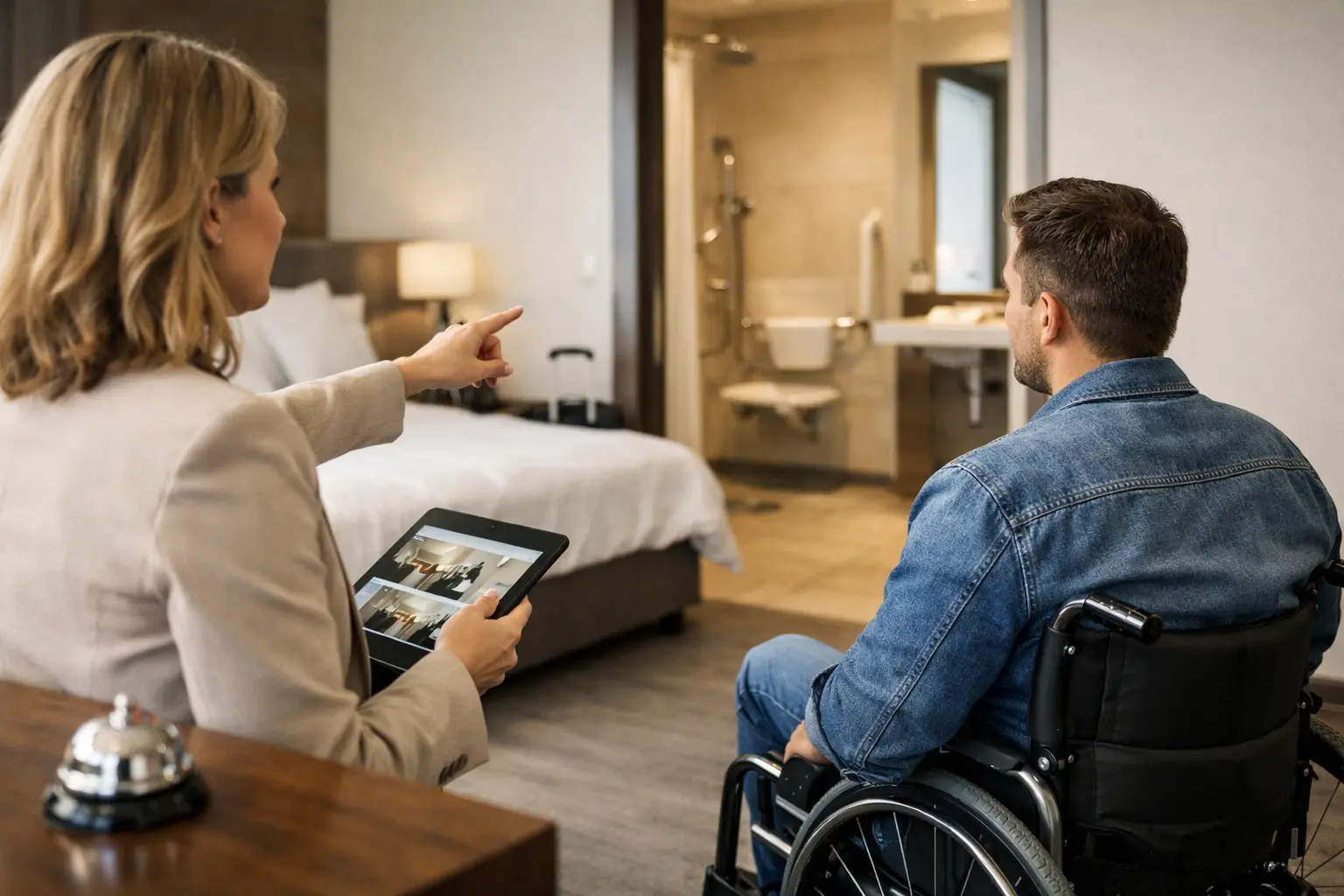
A hotel can call itself accessible and still leave you stuck at the front step, unable to reach the loo, or trying to squeeze a scooter through a bedroom door that was never going to work. That is why knowing how to check hotel accessibility properly matters so much. A few well-aimed questions before you book can save a ruined trip, wasted money and a lot of stress.
The problem is not always bad intent. Quite often, hotels use the word accessible very loosely. They may mean there is a lift, or one ground-floor room, or a grab rail in the bathroom. For wheelchair users, mobility scooter users and anyone travelling with reduced mobility, that is nowhere near enough detail. What matters is whether the place works for your actual needs, not whether it ticks a box on a booking site.
How to check hotel accessibility before you book
Start by ignoring the marketing language and looking for practical facts. If a hotel says it has an accessible room, that tells you almost nothing on its own. You need to know how you will get from the pavement to reception, from reception to the room, and from the room to the bathroom, restaurant and any outdoor areas you plan to use.
Photos are useful, but only if you look at them with the right questions in mind. A bathroom photo may show a shower seat, but it will not tell you if there is enough turning space beside the toilet. A bedroom shot may look spacious, but wide-angle images can make tight spaces seem generous. Treat pictures as clues, not proof.
The best approach is simple. Check the hotel website, compare it with booking platform listings, and then contact the hotel directly. If the information does not match, trust the version that sounds most specific, or better still, ask for measurements and recent photos.
What to ask when checking hotel accessibility
This is where a lot of people get caught out. They ask, “Is the hotel wheelchair accessible?” and the answer comes back, “Yes.” That answer is too broad to be useful. Ask narrow questions instead, because narrow questions get real answers.
Start with the entrance. Ask whether there are any steps from the street or car park to reception. If there is a ramp, ask if it is fixed or portable, and whether staff need to set it up. That matters if you arrive late, travel alone or need to come and go independently.
Then ask about the lift. Is there one? What are the internal dimensions? Can a larger powerchair or mobility scooter fit comfortably, or only a standard wheelchair? Some hotels proudly advertise a lift that is effectively too small for many users.
The bedroom itself needs proper detail. Ask for the door width, whether there is enough space on both sides of the bed, and whether furniture can be moved if needed. If you transfer from chair to bed, the side clearance matters far more than whether the room has been labelled accessible.
Bathrooms are often the deciding factor. Ask if it is a genuine wet room or simply a standard bathroom with a few rails added. Check whether the shower is level access, whether the floor drains properly, whether there is a fixed or fold-down seat, and where the grab rails are placed. Ask for toilet height and the transfer space beside it. A room can be manageable in every other respect and still fail completely because the bathroom layout does not work.
If you use a scooter, ask about charging. Is there space to charge in the room? Are sockets easy to reach? Can the scooter be stored safely without blocking the route to the bed or bathroom? Hotels do not always think about this unless you raise it.
Ask for measurements, not reassurance
Reassurance sounds nice, but it is not enough. “You should be fine” is not accessibility information. Door widths in centimetres, lift dimensions, bed height, shower threshold height and clear floor space are much more useful.
If staff seem unsure, ask them to measure and email you back. That extra step often tells you a lot. A hotel that takes accessibility seriously will usually be willing to check. One that keeps replying with vague promises may not understand the room well enough to rely on.
Ask for recent photos or a quick video
A few current photos can reveal more than a long email. Ask for pictures of the entrance, accessible bedroom, bathroom, and route from the lift to the room. If the hotel is helpful, a quick phone video is even better.
This matters because refurbishments, layout changes and furniture swaps can all affect access. A room described online three years ago may not be the same now. Even a decorative chair in the wrong place can turn a workable room into a struggle.
The accessibility details most travellers miss
Some of the biggest problems are not the obvious ones. You might confirm the accessible room is fine, then find the breakfast room is down a step, the terrace has no ramp, or the disabled parking is at the far end of a gravel car park.
Ask about the parts of the hotel you will actually use. That might include the bar, restaurant, pool, spa, meeting rooms, garden or accessible toilet in public areas. If you cannot reach those spaces, your stay may be technically possible but practically limited.
Floor surfaces matter too. Thick carpet can make self-propelling harder. Loose mats at the entrance can be awkward for wheels and scooter tyres. Gravel paths, steep slopes and heavy fire doors can all create barriers that never appear in the room description.
If you are travelling with a carer, partner or family member, think about how the room works for both of you. An accessible room is not always better if it is cramped for two people or has a bed setup that makes transfers harder. Accessibility is not one-size-fits-all.
Booking platforms can help, but do not stop there
Booking sites are fine for narrowing down options, but they are weak on detail. Filters such as accessible room, step-free access or roll-in shower are often inconsistent. Sometimes they come from the hotel, sometimes from old listing data, and sometimes they are simply too generic to trust.
Use them to build a shortlist, not to make a final decision. Once a hotel looks promising, go direct and verify the details yourself. That extra phone call or email is usually the difference between guessing and knowing.
If the hotel sends over information, keep it. Save the email, take screenshots and note the name of the person you spoke to. If there is a problem on arrival, having the details in writing makes it much easier to challenge politely and get things sorted.
How to judge whether a hotel understands accessibility
The way a hotel answers your questions tells you nearly as much as the answers themselves. Staff who understand accessibility tend to be specific, calm and practical. They know the room layout, they can describe the route through the building, and they do not act as if you are being awkward for asking.
If the replies are confused, defensive or overly cheerful without giving facts, be cautious. That does not automatically mean the hotel is unsuitable, but it does mean you should dig deeper before paying.
One useful test is to ask something operational, such as whether the portable ramp is available at all hours or whether the accessible room is the only room on that floor. These are not trick questions. They simply show whether the hotel deals with disabled guests in a real, everyday way.
At Andy Wright Travel, that is the difference that matters most - not polished accessibility statements, but whether a place works in practice when you arrive tired and just want your holiday to start properly.
When it depends on your equipment and travel style
A hotel that works for a manual wheelchair user may not work for a larger mobility scooter. A room that suits someone travelling with assistance may be awkward for an independent traveller. That is why how to check hotel accessibility always comes back to your own setup.
Think about your turning circle, transfer method, need for charging, whether you can manage a short ramp, and how much support you have with you. Be honest about what is manageable and what is likely to become exhausting by day two of the trip.
It is also worth thinking beyond the hotel. A perfect accessible room is less useful if the area outside is full of steep hills, broken pavements or inaccessible transport links. Accommodation is one part of the journey, not the whole thing.
Good accessible travel planning is not about expecting perfection. It is about reducing nasty surprises and giving yourself the best chance of a trip that feels independent, comfortable and enjoyable. Ask the awkward questions, get the measurements, and trust your instincts when a hotel sounds vague. A bit of groundwork before booking can make the difference between simply getting away and actually having the freedom to enjoy it.